
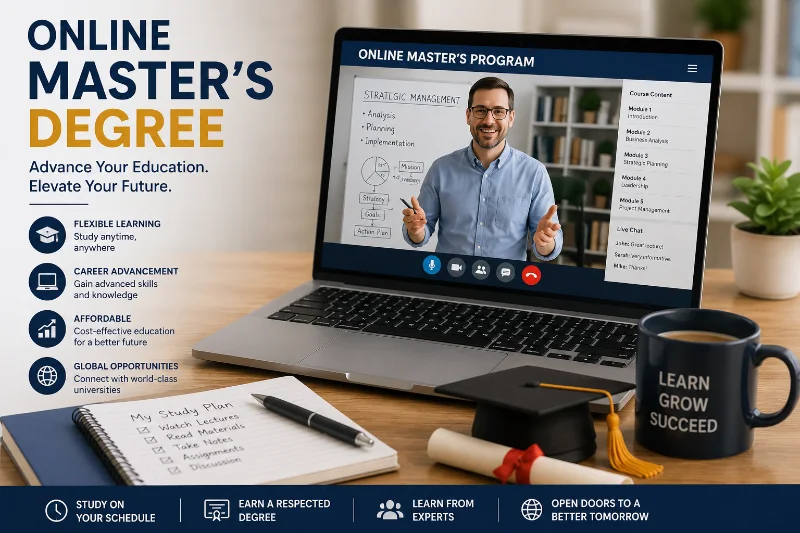
The typical path to a master’s degree was to relocate to a new city or to sacrifice a full-time position a few years ago. It’s no longer true. Master’s degree programs that are available online have transformed the way that people continue on with their education, allowing students to pursue advanced studies while remaining in their own homes and having to deal with daily demands such as work and family.
It’s also worth noting that as online learning has become more popular, so have their degrees, and employers are increasingly taking a look at them. Online degrees from reputable universities are now no different than degrees earned in the traditional classroom setting. Nevertheless, not all online master’s degrees are the same. Not all programs are created equal; some have great teaching, hands-on experience, and career support, others do not.
Who Benefits Most from an Online Master’s Degree?
There are various types of students who take part in online graduate education, as it offers them flexibility that is not offered by traditional classroom education.
Working Professionals
A master’s degree is a popular choice for many professionals who are continuing to work full-time, and can be obtained online. Flexible scheduling provides students the opportunity to study during evenings, weekends, or other times that are convenient for them without jeopardizing their income or their career.
Career Changers
People interested in switching their career paths typically opt for online master’s degree programs in order to acquire specialized knowledge to benefit from their new professions.
Parents and Caregivers
Parents with family and parenting responsibilities are able to work through studies at home. Online education gets rid of the necessity of commuting to school, and the student may structure study time around family commitments.
International Learners
Students from countries abroad can attend reputed Universities without moving to other Countries. This can result in lower living cost and internationally recognized qualifications.
The teachers in Remote Locations
Students who are away from the universities can get quality education without shifting their location. This will increase educational opportunities for the students who previously had little option for graduate study.
Most Valuable Online Master’s Fields
While many disciplines are available online, certain fields consistently demonstrate strong employer demand and attractive career prospects.
Data Science
Increasingly, organisations are making decisions based on data. Master’s in data science are courses that focus on statistical analysis, machine learning, AI, programming, and big data management. Students typically end up as data scientists, machine learning engineers, or analytics practitioners.
Cybersecurity
The increasing cyberattacks have fuelled high demand for cybersecurity professionals. Preparing students for careers protecting organizational systems, students learn network security, ethical hacking, digital forensics, cloud security, and risk management.
Business Administration
While there is a wide variety of business degrees available, one of the most popular is the online MBA. The finance, marketing, human resources, operations, and leadership specializations prepare students for leadership roles in a management career.
Public Health
Public health programs equip students for professions in health systems, disease prevention, epidemiology, health policy and community health promotion. Healthcare providers continue to grow their preventive care programs, and demand is growing accordingly.
Education
Master’s degrees are often pursued by teachers and others in the field to deepen the knowledge and skills of the teachers in their subject area; in teaching and learning; in curriculum design; or in educational technology skills.
Engineering
There are many universities that now provide online engineering master’s degrees in fields like civil, electrical, mechanical, and software engineering. These courses are an amalgamation of knowledge and problem-solving.
Project Management
Project Management degrees train individuals to effectively manage the project, budget, risk, and deliver successful initiatives for business in various industries.
Accreditation and Recognition
Accreditation is one of the most important factors when evaluating any online master’s degree.
Institutional Accreditation
Institutional accreditation confirms that a university meets established educational quality standards. Employers generally recognize degrees from properly accredited institutions, making this the first factor students should verify.
Programmatic Accreditation
Some disciplines require additional specialized accreditation beyond institutional approval. For example, business, engineering, healthcare, and education programs may have professional accrediting organizations that evaluate curriculum quality and industry standards.
Professional Licensing Compatibility
Students planning careers requiring professional licenses should verify that the online program satisfies licensing requirements within their intended region or country. Educational requirements can differ across jurisdictions.
Employer Acceptance
Most employers now recognize reputable online degrees from accredited universities. In many cases, employers focus more on institutional reputation, relevant skills, and practical experience than on whether courses were completed online or on campus.

Synchronous Versus Asynchronous Learning
Online master’s programs generally use one of two learning formats, and understanding the difference helps students choose the best fit.
Synchronous Learning
Synchronous programs require students to attend live virtual classes at scheduled times. These sessions encourage direct interaction with professors and classmates through discussions, presentations, and collaborative learning.
Advantages include immediate feedback, stronger classroom engagement, and real-time networking opportunities. However, fixed schedules may be challenging for students with demanding jobs or those living in different time zones.
Asynchronous Learning
Asynchronous learning allows students to access recorded lectures, complete assignments independently, and study according to their own schedule. This flexibility makes it especially attractive for working professionals and international students.
Group Projects
Many online master’s programs include collaborative assignments that help students develop teamwork, communication, and leadership skills while working with classmates from diverse professional backgrounds.
Time-Zone Considerations
International students should carefully review live session schedules before enrolling. Programs designed primarily for local students may require attendance during inconvenient hours.
Total Cost of an Online Degree
Evaluating tuition alone does not provide a complete picture of educational expenses.
Tuition
Tuition remains the highest cost, but prices vary significantly between universities, program lengths, and residency status. Comparing the total program cost rather than the cost per course provides a more accurate estimate.
Technology Fees
Some universities charge additional technology or online learning fees that support digital platforms, software access, and virtual classroom services.
Books and Software
Students should budget for textbooks, specialized software licenses, online databases, and laboratory simulation tools when required.
Residency Requirements
Certain online programs include short on-campus residencies for workshops, research activities, or practical training. These requirements may involve travel, accommodation, and transportation expenses.
Examination Costs
Certification exams, proctoring fees, graduation charges, and professional licensing examinations may increase the total investment.
Assessing Academic Quality
A respected online master’s degree combines academic excellence with practical learning experiences.
Faculty Credentials
Experienced faculty members with strong academic backgrounds and industry expertise enhance learning by connecting theory with real-world practice.
Curriculum Relevance
Programs should regularly update course content to reflect current technologies, industry standards, and emerging professional trends.
Capstone Projects
Many master’s programs conclude with capstone projects that require students to solve practical problems, conduct research, or develop professional portfolios demonstrating workplace readiness.
Research Opportunities
Students interested in doctoral studies or research careers should examine opportunities to participate in faculty-led research, publications, or academic conferences.
Student Support
Quality online education includes academic advising, tutoring, library access, technical support, mental health resources, and responsive communication throughout the program.
Career Services and Networking
Strong career support significantly increases the long-term value of an online master’s degree.
Virtual Career Fairs
Many universities organize online recruitment events where students can connect directly with employers seeking graduate-level talent.
Alumni Access
Active alumni networks provide valuable career advice, mentorship, industry insights, and professional connections that often lead to job opportunities.
Mentoring
Faculty members and industry professionals frequently mentor graduate students, helping them refine career goals, develop leadership skills, and navigate career transitions.
Internships
Some online programs partner with organizations to provide internships, practical training, or project-based learning experiences that strengthen resumes.
Employer Partnerships
Universities with established employer partnerships may offer students exclusive recruitment opportunities, corporate training programs, and direct hiring pathways.
Admission Requirements
Admission standards vary by university and program, but several common requirements apply.
Bachelor’s Degree
Applicants generally need a recognized bachelor’s degree from an accredited institution. Some programs also require minimum grade point averages.
Professional Experience
Executive and specialized master’s programs often prefer applicants with relevant work experience, particularly in business, healthcare, and management.
Test Requirements
Although many universities have reduced standardized testing requirements, some programs may still request examinations depending on the discipline or applicant profile.
Statement of Purpose
Applicants typically submit a statement explaining academic interests, career goals, motivation, and reasons for selecting the program.
Recommendations
Letters of recommendation from professors, supervisors, or professional colleagues help universities evaluate an applicant’s academic ability, work ethic, and leadership potential.

Red Flags to Watch For
Students should remain cautious when evaluating unfamiliar online programs.
- Aggressive sales tactics that pressure immediate enrollment.
- Unclear or unverifiable accreditation information.
- Guaranteed employment or unrealistic salary promises.
- Hidden tuition, technology, or graduation fees.
- Limited academic advising, technical support, or career services.
- Poor graduation rates or consistently negative student reviews.
- Outdated curricula that fail to reflect current industry needs.
Recognizing these warning signs helps students avoid programs that may offer limited educational or career value.
Conclusion
When carefully selected, an online Master’s Degree can be a worthwhile investment. Students should consider not just convenience or low tuition, but also accreditation, curriculum quality, faculty expertise, employer recognition, student support, career services, and overall program costs.
The best online master’s programs build transferable skills, provide hands-on experience, and equip students for future career advancement. Students can gain a degree that can help build their professional credibility, increase career opportunities, and provide long-term value in a global job market by carefully considering these programs, comparing them, and focusing on what matters most: educational quality.