
Applying to university is an exciting milestone, but it can also feel overwhelming. Every institution has its own admission requirements, and those requirements often vary based on the country, the degree level, and even the program you choose. A business school, for example, may look for different qualifications than an engineering or medical program.
One of the biggest mistakes students make is assuming that meeting the minimum admission requirements guarantees acceptance. In reality, universities, especially competitive ones, often receive thousands of applications from qualified students. That’s why it’s important to understand not only the basic eligibility criteria but also what makes an application stand out.
Whether you’re applying to a university in your own country or planning to study abroad, this guide walks you through the key admission requirements and provides a practical checklist to help you stay on track.
Academic Requirements
Your academic record is usually the first thing an admissions committee reviews. For undergraduate programs, you’ll generally need a recognized high school qualification or its equivalent. If you’re applying for a master’s degree, you’ll typically need a bachelor’s degree from an accredited institution. Doctoral programs may require both a relevant master’s degree and research experience.
The subjects you’ve studied are equally important. Engineering programs often expect applicants to have mathematics and physics, while health science courses usually require biology and chemistry. Business programs may prefer applicants with mathematics or economics backgrounds.
If you’re applying internationally, don’t worry if your grading system differs from the university’s. Admissions offices regularly convert grades from different countries into their own evaluation system, allowing them to compare applicants fairly.

Standardized Tests
Although many universities have become more flexible about standardized testing, these exams still play an important role for many applicants.
Students applying for undergraduate programs may need to submit SAT or ACT scores, depending on the country and institution. Graduate applicants may encounter exams such as the GRE for science and engineering or the GMAT for business schools.
Some professional programs, including medicine, law, and architecture, also have their own entrance examinations.
English-Language Requirements
If English isn’t your first language, you’ll likely need to prove your language proficiency before being admitted to an English-medium university.
Most institutions accept one or more of these tests:
- IELTS
- TOEFL
- PTE Academic
- Duolingo English Test
Every university sets its own minimum score requirements, and some departments may require higher scores than others.
Fortunately, not every international student needs to take an English test. Some universities waive this requirement if you’ve completed previous education entirely in English or if you’re from a country where English is an official language.
Always check the university’s exemption policy instead of making assumptions, as the rules vary widely between institutions.
Application Documents
A great application isn’t just about good grades. It also depends on submitting the right documents before the deadline.
Most universities ask for official academic transcripts and graduation certificates. International applicants will also need a valid passport, while graduate students are often expected to submit an updated CV or résumé.
Certain programs require additional materials. Design and architecture applicants usually submit portfolios, while research-based graduate programs may request writing samples or research proposals.
If you’re applying for scholarships or a student visa, financial documents such as bank statements or sponsorship letters are often required as well.
Before uploading your files, double-check that every document is clear, complete, and matches the information entered in your application form.
Personal Statement and Essays
Your personal statement gives admissions officers a chance to learn about the person behind the grades.
Rather than listing achievements, focus on explaining your academic interests, why you’ve chosen the program, and how it fits into your long-term career goals. Share meaningful experiences that influenced your decision and demonstrate genuine enthusiasm for the subject.
One common mistake is sending the same essay to every university. Admissions teams can usually tell when an essay hasn’t been tailored to their institution. Taking the time to personalize your statement shows that you’ve researched the university and understand what it offers.
Finally, proofread carefully. Grammar mistakes, spelling errors, and unclear writing can weaken an otherwise strong application.
Recommendation Letters
Recommendation letters provide valuable insight into your abilities from people who know your work well.
For undergraduate applications, teachers or school counselors are usually the best choices. Graduate applicants often request letters from university professors, research supervisors, or employers.
Choose referees who can speak specifically about your academic performance, leadership, work ethic, or research potential rather than someone with an impressive title who knows very little about you.
It’s also courteous to ask for recommendations early. Give your referees enough time, share your CV, explain the program you’re applying to, and remind them of the submission deadline. The more information they have, the stronger and more personalized their letter will be.
Interviews and Portfolios
Some universities go beyond written applications by including interviews or practical assessments.
Interviews may be conducted online, in person, or through recorded video responses. Questions often focus on your academic interests, motivation for choosing the program, problem-solving skills, and future goals.
Creative programs frequently require portfolios that showcase your best work. Architecture, art, photography, animation, music, and design applicants are often evaluated based on both creativity and technical ability.
Research degrees may require a research proposal, while some computer science or engineering programs include coding tests or technical assessments.
Preparing for these additional requirements well in advance can make a significant difference.
Requirements for International Students
International applicants usually have a few extra steps to complete before enrollment.
Many universities ask for credential evaluations to verify foreign qualifications. Documents written in another language often need certified translations before submission.
You’ll also need to demonstrate that you have enough financial resources to cover tuition fees and living expenses. This proof is commonly required for both university admission and student visa applications.

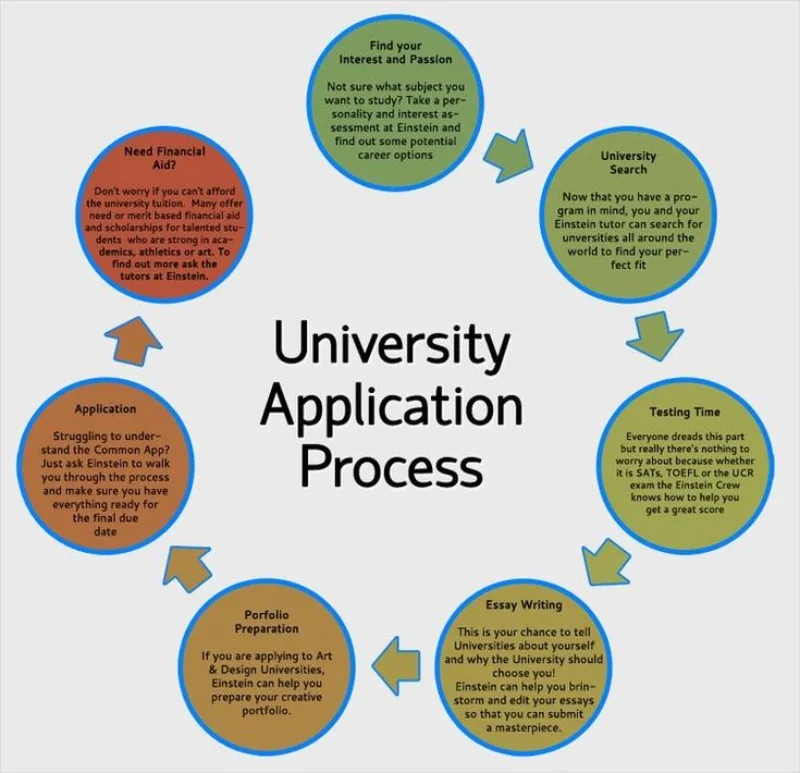
Application Timeline
Planning ahead is one of the easiest ways to reduce stress during the admission process.
Start by researching universities, comparing admission requirements, tuition costs, scholarships, and application deadlines. Next, register for any required standardized or English-language tests early enough to allow time for a retake if necessary.
As deadlines approach, gather transcripts, recommendation letters, financial documents, and identification papers. Once everything is ready, complete your application carefully, review every section, and submit it before the deadline.
If you’re accepted, follow the university’s instructions to confirm your place, pay any required deposits, and begin the visa application process if you’re studying abroad.
A timeline that begins six to twelve months before your intended intake gives you plenty of time to prepare without rushing.
Final Application Checklist
Before submitting your application, make sure you’ve completed every requirement.
- Academic transcripts and certificates
- GPA requirements verified
- Standardized test scores (if required)
- English-language test results
- Personal statement or admission essays
- Recommendation letters
- Updated CV or résumé
- Portfolio or research proposal (if applicable)
- Passport or identification documents
- Financial documents
- Application fee payment
- Final review before submission
- All deadlines confirmed
A few extra minutes spent checking your application can prevent costly mistakes that might delay or even affect your admission.
Conclusion
Every university has its own admission process, but successful applications have one thing in common, they’re well prepared. Strong grades are important, but they’re only one part of the picture. Universities also value thoughtful essays, meaningful recommendations, complete documentation, and applicants who clearly understand why they’re pursuing a particular program.
Whether you’re applying to a local university or planning to study overseas, taking the time to understand each institution’s requirements will make the process much smoother. By staying organized, preparing early, and following a clear checklist, you’ll not only meet the admission requirements but also present yourself as a confident and competitive candidate ready for the next stage of your academic journey.